Kindergarten Teacher Training: Waldorf, Montessori and Reggio Emilia Together
Why our kindergarten teacher training brings Waldorf, Montessori and Reggio Emilia together, and what each approach gives a teacher in an Indian classroom.
 Jayanthi Vijayan
· 2 min read
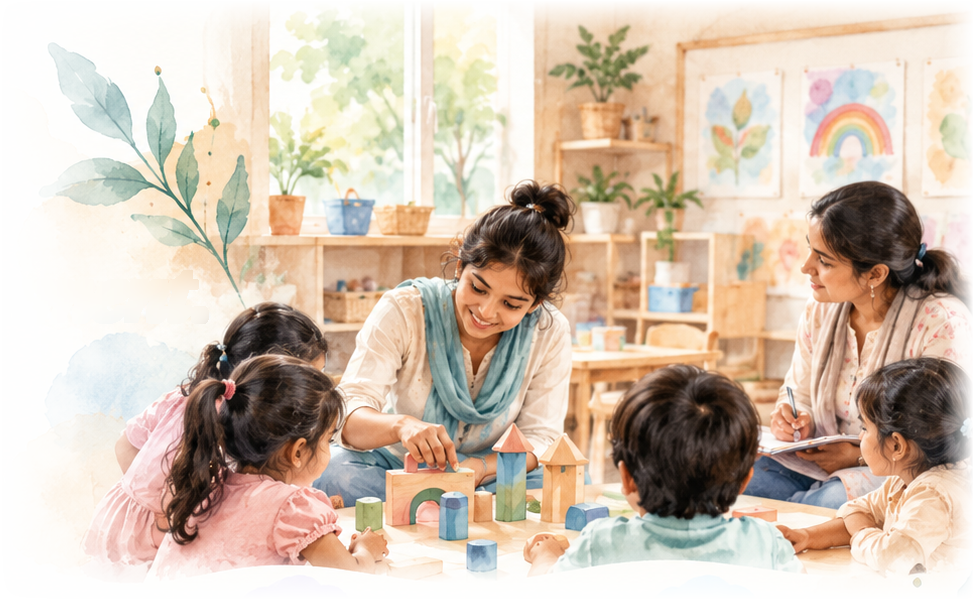
Good kindergarten teacher training should change what happens in the classroom on Monday morning. Not just what teachers know, but what they do, what they notice and how children feel.
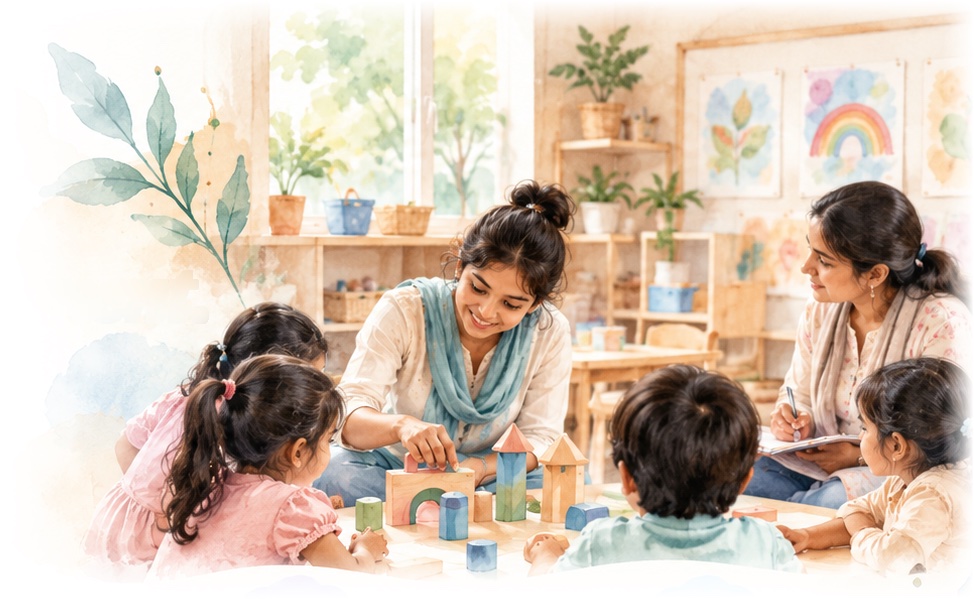
At Sarvam Ekam our training brings together three of the world's best-known approaches to early childhood: Waldorf, Montessori and Reggio Emilia. We do not ask schools to choose one and copy it. We take what is strongest in each and shape it into one practical way of working that fits Indian classrooms.
Why not just pick one method?
Each approach was born in a particular place and time. Montessori in Rome, Waldorf in Stuttgart, Reggio Emilia in a small Italian town after the war. Each has deep wisdom. Each also assumes things that may not match a classroom of 30 children in Chennai or Hyderabad.
Teachers in India need ideas that work with their class sizes, their families, their languages and their festivals. Blending the three gives them more tools, and the judgement to choose between them.
What each approach gives a teacher
Montessori: a prepared environment
Montessori education teaches us to prepare the room so that children can work independently. Materials are real, ordered and within reach. The teacher steps back, and children build focus and self-reliance.
In practice: low open shelves, practical-life activities like pouring and sweeping, and letting a child finish a task without interruption.
Waldorf: rhythm, story and the senses
Waldorf education gives the day a gentle rhythm and places stories, songs, movement and natural materials at its heart. Imagination is protected and screens wait.
In practice: a predictable daily and weekly rhythm, oral storytelling, seasonal tables, and handwork.
Reggio Emilia: the child as a researcher
The Reggio Emilia approach sees the child as capable and curious. Teachers listen, document children's ideas and grow projects from their questions.
In practice: long projects that follow a question, walls that show children's thinking, and many "languages" of expression: drawing, clay, building, drama.
What our kindergarten teacher training looks like
Most of our training happens in the school's own classrooms, with its own children. Teachers try an idea, we observe together, and we reflect and adjust. It is a cycle, not a one-off course.
- Observing children and writing useful notes.
- Setting up classrooms and learning corners.
- Planning the daily rhythm and circle time.
- Using stories, songs and traditional Indian games.
- Talking with parents about how children learn.
Many schools begin with a kindergarten audit, so that training starts from a clear picture of what is already working.
The Indian thread
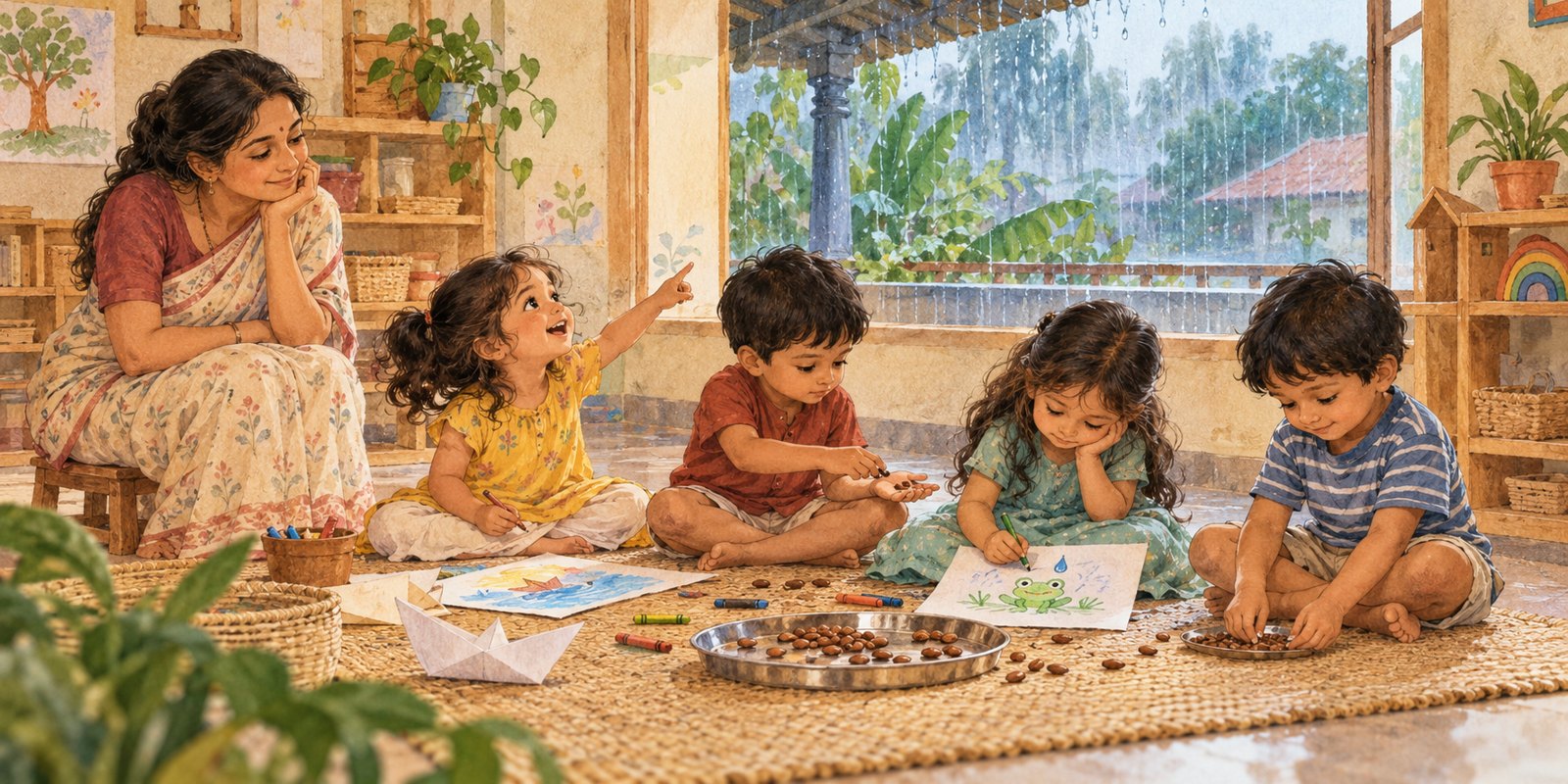
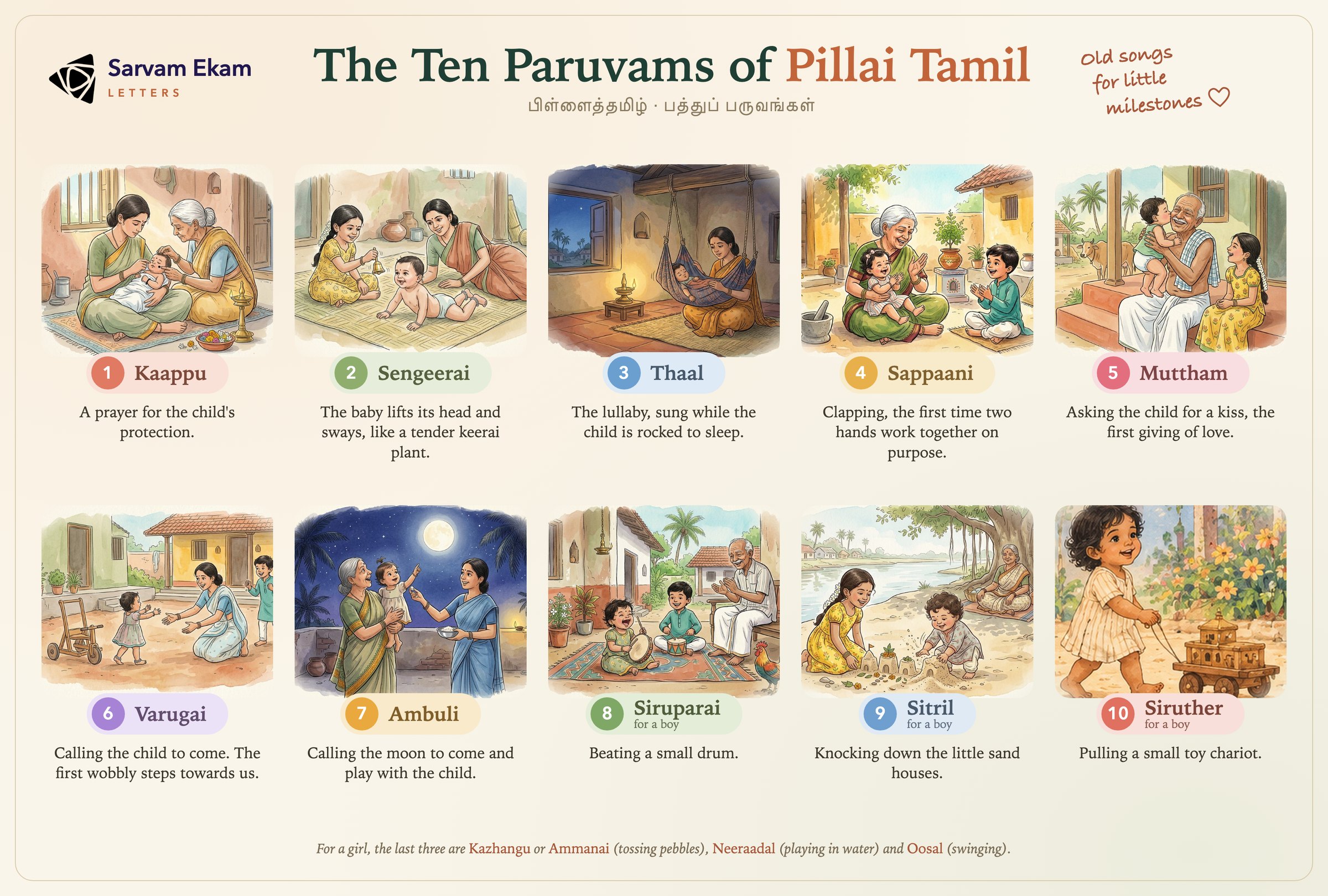
Alongside the three approaches, we weave in what Indian childhoods have always had: kolam, folk songs, traditional games, festivals and grandparents' stories. Children learn best when school feels connected to home.
Bring training to your school
If you lead a kindergarten or a group of schools, we would love to hear from you. Read what teachers say on our Voices page, then contact us to plan training for your team.
Questions parents and teachers ask
Is the training only for Montessori or Waldorf schools?
No. It is designed for any kindergarten, including mainstream and CBSE or state-board schools that want more child-centred, play-based classrooms.
Where does the training happen?
Most of it happens in your own school and classrooms, with your teachers and children, so new ideas are practised where they will be used.
How long does kindergarten teacher training take?
It works best as an ongoing cycle across the school year rather than a single workshop. We plan the length with each school after understanding its needs.
More Letters from the Founder →
Jayanthi Vijayan
Founder of Sarvam Ekam. Jayanthi works with kindergartens across India on audits, teacher training and curriculum design, bringing together Waldorf, Montessori, Reggio Emilia and traditional Indian play.
Connect on LinkedIn →