Pillai Tamil: What an Old Poem Teaches Us About Watching Little Children
Pillai Tamil poets sang a child's growth in ten stages, from clapping to calling the moon. What this old Tamil form can teach KG teachers and parents today.
 Jayanthi Vijayan
· 7 min read
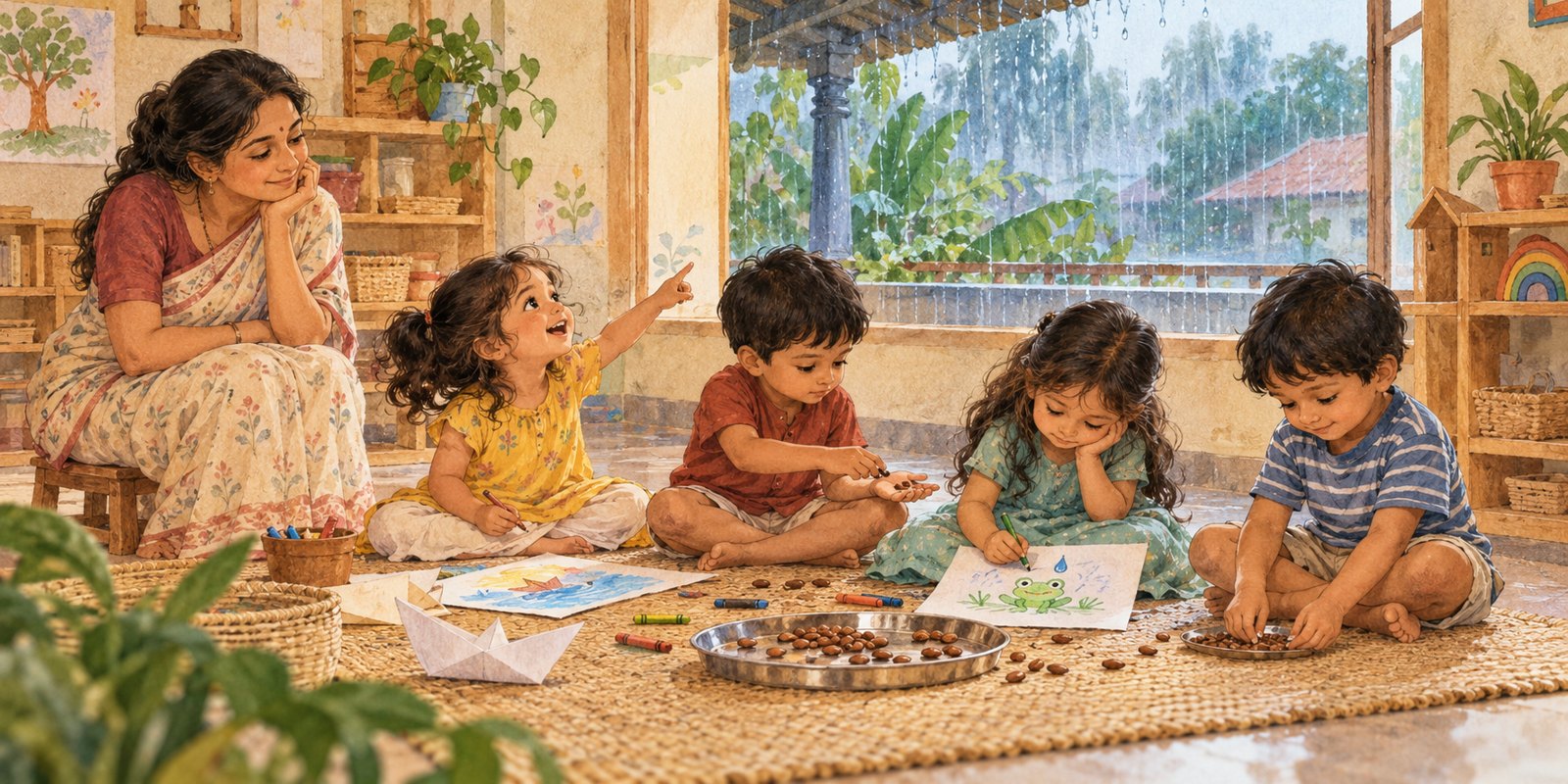
Last month, in a kindergarten room with a red-oxide floor, I watched a little girl find out about Pillai Tamil without knowing the name. She was not yet three. She sat on the mat, looked at her teacher and began to clap. She wasn't keeping time to anything. She clapped because she had just found out her two hands could meet and make a sound. Her face said, Did you hear that? I did that.
The teacher was a young woman from a village near Thanjavur. She didn't go back to her lesson plan. She smiled and began to sing, very softly, "Sappaani kotti, sappaani kotti..." the way her own grandmother used to. The child clapped harder. Two more children crawled over to join in. For about four minutes nobody was "teaching", and everybody was learning.
A poem shaped like a growing child
Afterwards I asked the teacher whether she knew where that song came from. She said, "Amma used to sing it. That's all I know." So I told her about Pillai Tamil.
Pillai Tamil (பிள்ளைத்தமிழ்) is one of the old forms of Tamil poetry, part of the group of literary forms called the prabandhams. In it, the poet sings to a god, goddess, saint or great person as if they were a small child. Probably the best-loved example is Kumaraguruparar's Meenakshi Ammai Pillaitamil, which pictures the goddess of Madurai as a little girl.
What moves me as a teacher is how the poem is built. It is divided into ten paruvams, or stages, and each one follows something real that a baby or toddler does. The poets were not only praising God. They were watching children, very closely, and writing down what they saw.
The ten paruvams, seen with a teacher's eyes
Different poets and scholars explain the details a little differently. In broad terms, though, the stages go like this:
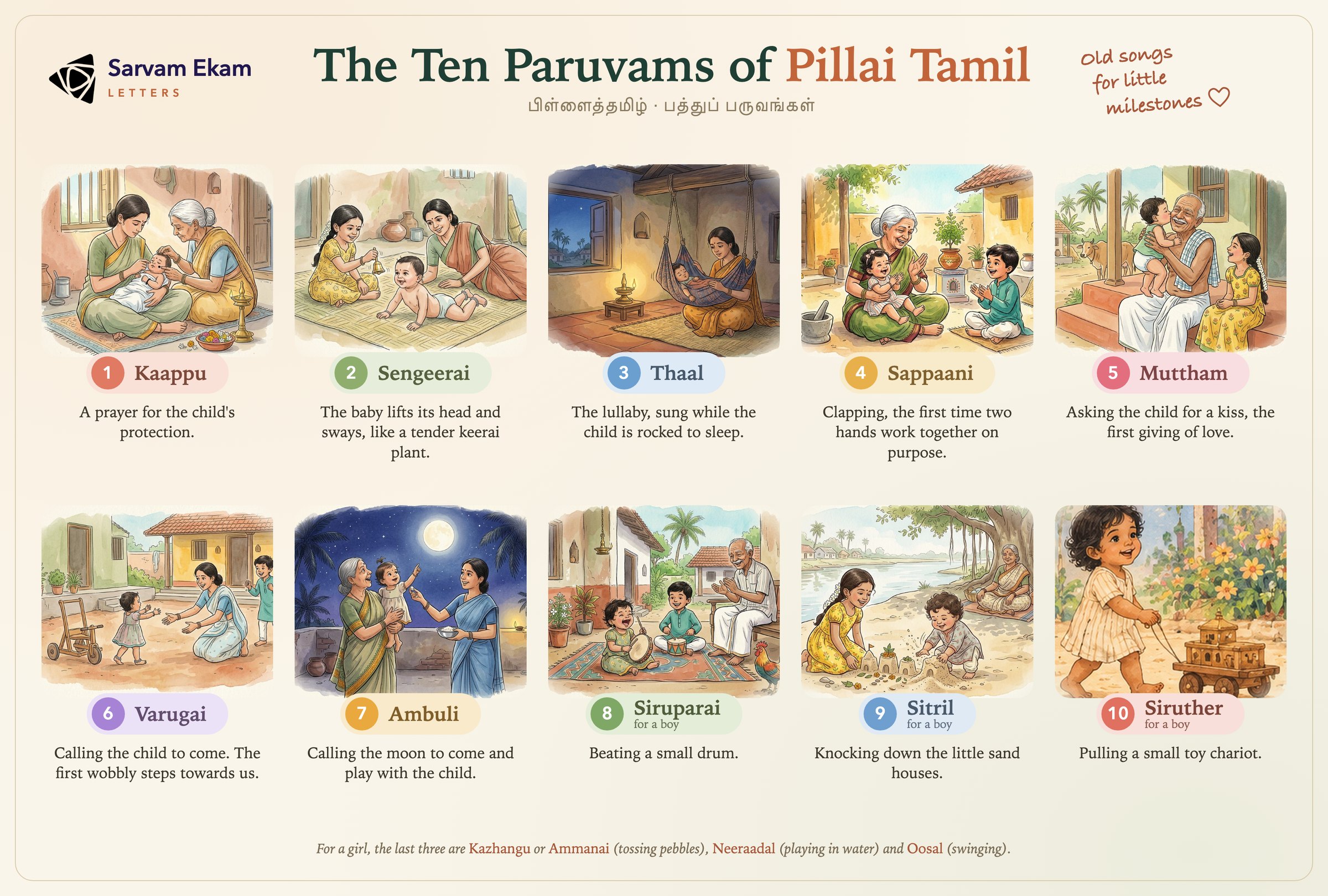
- Kaappu: a prayer asking for the child to be protected.
- Sengeerai: the baby lifts its head and sways, like a tender keerai plant moving in the wind.
- Thaal: the lullaby, sung while the child is rocked to sleep.
- Sappaani: clapping, the first time two hands work together on purpose.
- Muttham: asking the child for a kiss, the first giving of love.
- Varugai: calling the child to come. The first wobbly steps towards us.
- Ambuli: calling the moon to come and play with the child.
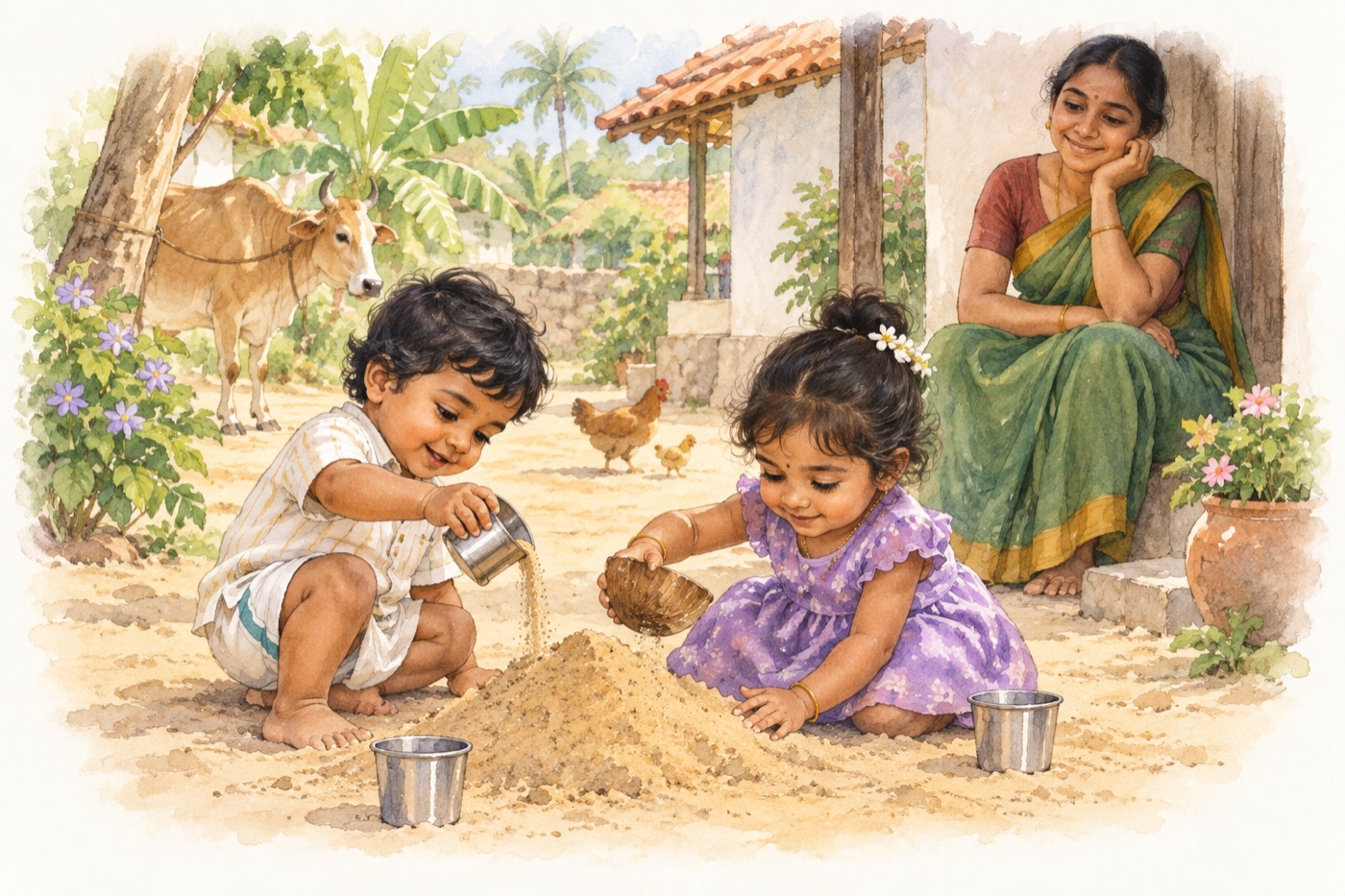
For a boy, the last three are Siruparai (beating a small drum), Sitril (knocking down the little sand houses the girls have built) and Siruther (pulling a small toy chariot). For a girl, they are Kazhangu or Ammanai (playing with pebbles or tossing beads), Neeraadal (bathing and playing in water) and Oosal (swinging).
Look at that list again. Head control, then hand coordination, then love and attachment, then walking, then imagination and wonder (who else would invite the moon to play?), then rhythm, building, pulling, throwing and swinging. Today we would call this a developmental sequence. The poets called it a song.
Long before anyone gave us a checklist, our poets sat on the thinnai and watched a baby clap. That watching is where all good teaching begins.
Why this matters in a kindergarten today
NEP 2020 and the NCF for the Foundational Stage (NCF-FS) 2022 both ask us to follow the child's development, to teach through play, songs and stories, and to keep children connected to their own languages and cultures. Teachers sometimes hear this as one more thing to do.
Pillai Tamil shows us that our tradition already did it, with great tenderness.
Three ideas stay with me.
1. Every small action is a milestone worth celebrating
The poets gave a whole section to clapping, and a whole section to the first wobbly walk. They didn't hurry the child towards writing the alphabet. In many of our KG rooms, a three-year-old who claps is just making noise and is told to sit quietly. Pillai Tamil would sing to that child instead.
2. Development is rhythmic, sung and done with the body
Every paruvam is lived through the body: rocking, clapping, kissing, walking, drumming, swinging. This is very close to what Waldorf teachers mean by rhythm, what Montessori meant by the hand guiding the mind, and what Reggio Emilia means by the hundred languages of children. We didn't need to borrow the idea. It was sitting in a Madurai poem the whole time.
3. The adult's job is to watch and respond
In each stage the adult is watching what the child is doing and answering it with a song. Nobody is giving instructions. This is the same habit I ask teachers to build when I talk about observing children for ten minutes before teaching.
Bringing the paruvams into your classroom
You don't need to be a Tamil scholar for this. You only need to notice and to sing. Here are some simple ways in.
For teachers in Pre-KG and LKG:
- Make a "paruvam corner" in your observation notebook. When a child claps, swings, builds, knocks something down or reaches for the moon, write it down under the stage it brings to mind.
- Bring back the songs. Nila nila odi vaa is the ambuli paruvam in miniature. Sing it on a full-moon evening, or before children go home on the day before Pournami.
- Put out a tray of wet sand or mud with small cups. That is sitril. Watch who builds, who knocks down, who rebuilds and who comes to you to complain. Each one is telling you something.
- Offer pull-along toys: a wooden cart, or a coconut shell on a string. This is a child's siruther, and a lesson in cause and effect.
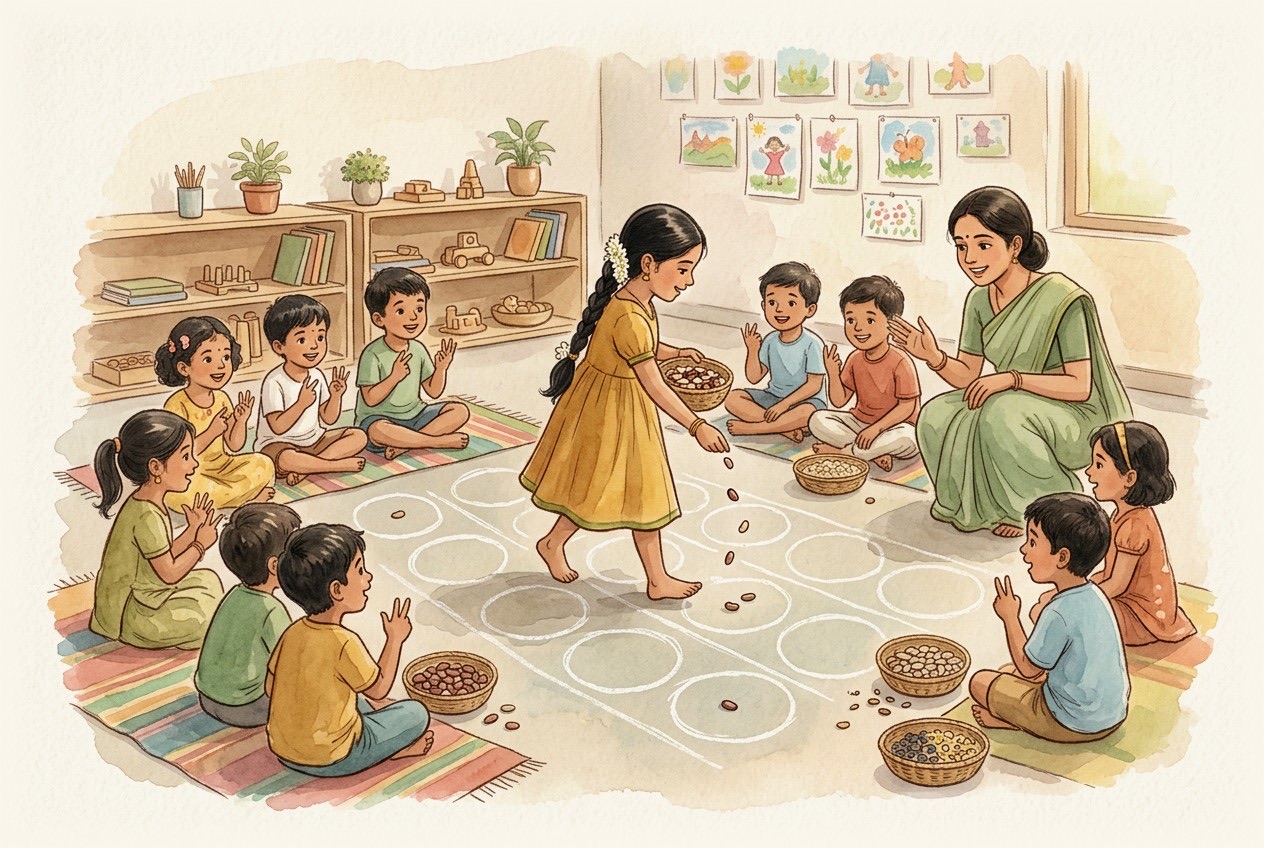
- Give the children small pebbles or tamarind seeds to toss and catch, like ammanai. This builds the hand-eye coordination they will need later for writing. You will find more ideas by age on our traditional games page.
For parents at home:
- Sing to your child while they are still small enough to be rocked. Any language you love will do. A thaalaattu at bedtime is not old-fashioned. It helps calm the child's nervous system.
- When your toddler claps or walks towards you, stop what you're doing and respond. Put the phone face down. That moment is the paruvam.
- Take your child to see the moon. Point at it, name it and invite it to come down. Children love being part of the game.
For school leaders:
- Before the next annual day, ask whether your KG children really need to dance to a film song. A short Pillai Tamil-inspired programme of clapping songs, a lullaby, a moon song and a swing song would show parents real development, sung in their own language.
- Make time in teacher training for regional children's songs and poetry. Many of your teachers already carry these songs from home. They just need permission to use them.
A gentle caution
Please don't turn the ten paruvams into a new checklist with ticks and marks. Children don't all walk on the same day or clap in the same month, and the poets never expected them to. The paruvams are a way of seeing the child. They are not a scale for measuring the child.
Also remember that the poems were written for gods and great people. Our children are not little gods, but each of them deserves the same attention the poets gave. That is the whole lesson.
Begin with one song this week
The young teacher from Thanjavur now starts each morning with one song from her grandmother's store. She tells me the children ask for "the clapping one" by name. She hadn't seen herself as a carrier of Tamil literature until now. She is one.
If you would like your teachers to learn to watch children this closely, and to bring rhythm, song and our own heritage back into the KG day, our KG Teacher Training blends Waldorf, Montessori and Reggio Emilia with exactly this kind of Indian wisdom. Sarvam Ekam works with a group of schools and trains teachers on their own campuses. Write to me and tell me which songs your grandmother sang. I would love to hear them.
With warmth, Jayanthi
Questions parents and teachers ask
What is Pillai Tamil?
Pillai Tamil (Pillaitamil) is a classical form of Tamil poetry in which the poet praises a god, saint or great person as if they were a small child. It is divided into ten stages, called paruvams, that follow a child's early growth.
What are the ten paruvams of Pillai Tamil?
The first seven are Kaappu, Sengeerai, Thaal, Sappaani, Muttham, Varugai and Ambuli. For boys, the last three are Siruparai, Sitril and Siruther. For girls, they are Kazhangu or Ammanai, Neeraadal and Oosal.
Can Pillai Tamil be used in kindergarten teaching?
Yes. The paruvams give teachers a simple, culturally rooted way to notice children's development, and they suggest songs and play such as clapping rhymes, moon songs, sand building and pull-along toys. They should guide observation and must not be turned into a strict checklist.
Which is the most famous Pillai Tamil work?
Kumaraguruparar's Meenakshi Ammai Pillaitamil, which sings of the goddess Meenakshi of Madurai as a little girl, is one of the best-loved examples.
More Letters from the Founder →
Jayanthi Vijayan
Founder of Sarvam Ekam. Jayanthi works with kindergartens across India on audits, teacher training and curriculum design, bringing together Waldorf, Montessori, Reggio Emilia and traditional Indian play.
Connect on LinkedIn →