Play-Based Learning in Kindergarten: A Practical Guide for Indian Schools
What play-based learning in kindergarten really looks like in an Indian classroom, why NEP 2020 asks for it, and simple ways teachers can start this week.
 Jayanthi Vijayan
· 3 min read
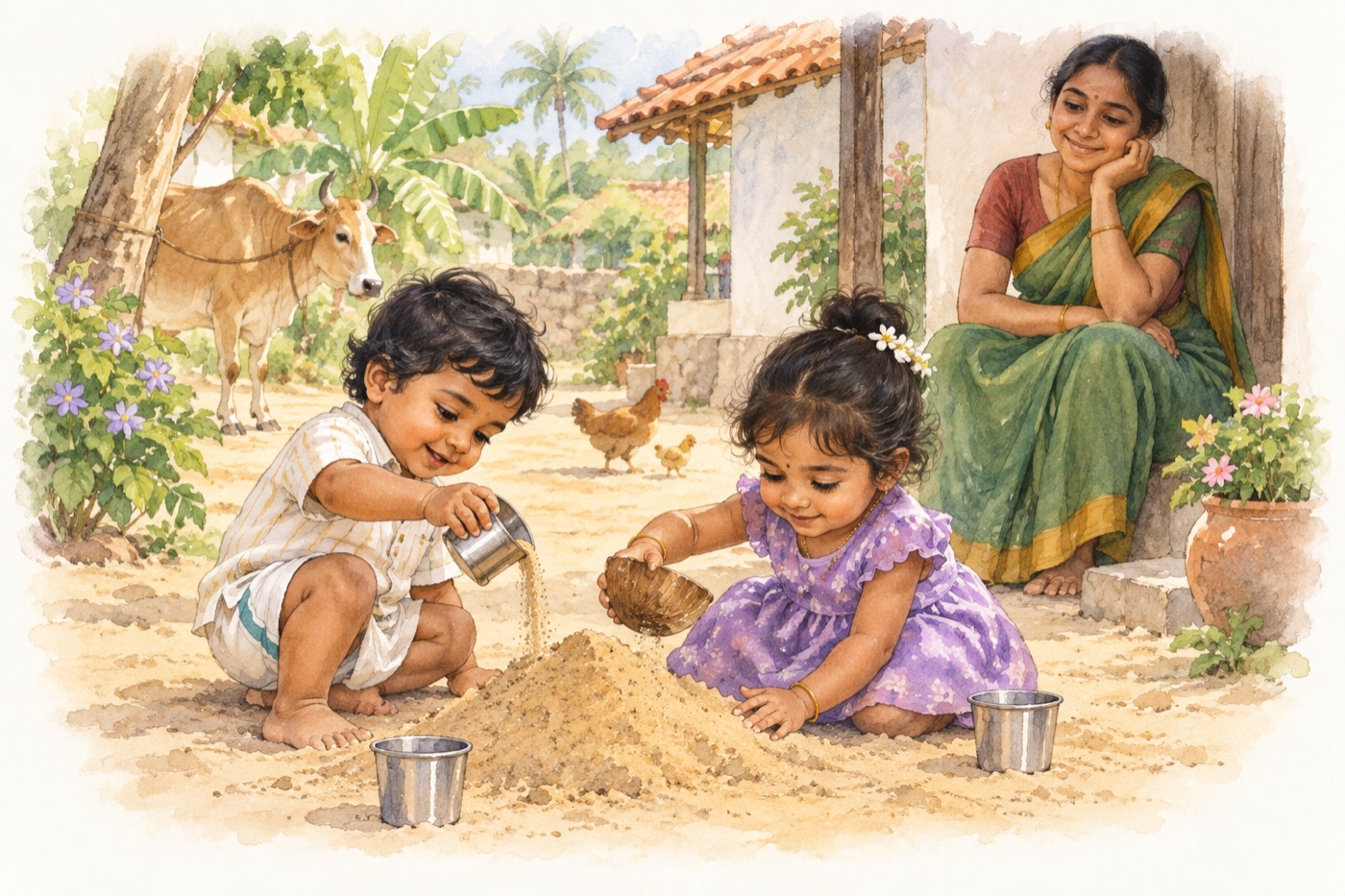
Play-based learning in kindergarten is not "free time" before the real work begins. For young children, play is the real work. It is how they test ideas, use new words, solve problems and learn to live with other people.
Many Indian schools agree with this in principle, but find it hard in practice. Parents ask for worksheets. Timetables are full. Classrooms are crowded. This guide is for teachers and school leaders who want to make the shift, one step at a time.
Why play-based learning matters now
India's National Education Policy 2020 treats the years from three to eight as one "foundational stage", and asks that learning in these years be play-based and activity-based. The National Curriculum Framework for the Foundational Stage, published by NCERT in 2022, builds on the same idea.
So play is no longer only a philosophy. It is the direction the whole system is moving in.
What play-based learning in kindergarten looks like
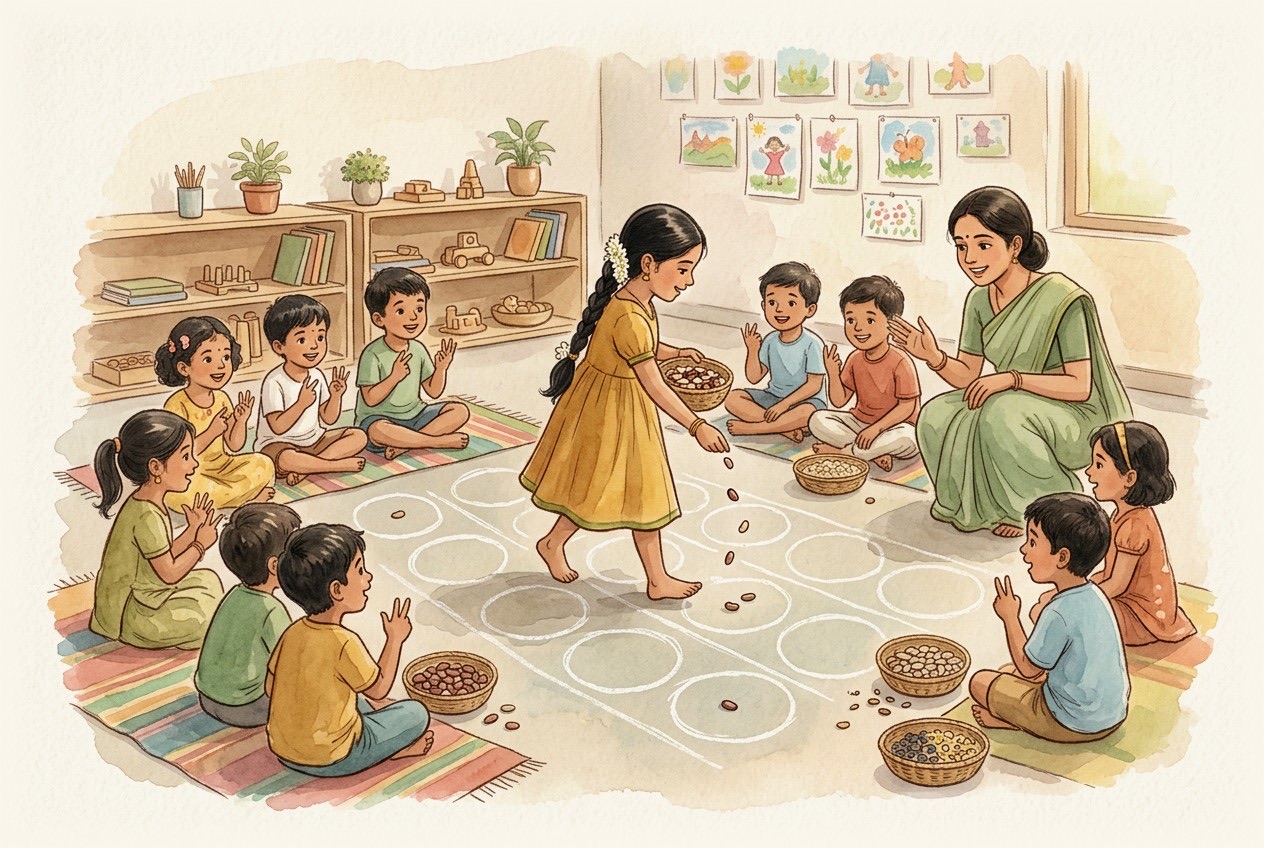
Play-based does not mean unplanned. A good play-based classroom is carefully prepared. You might see:
- Learning corners for blocks, pretend play, reading, art and sand or water.
- Open-ended materials: wooden blocks, seeds, shells, cloth, clay, leaves. Things that can become anything.
- Traditional games such as pallankuzhi, paandi and clapping songs, which carry maths, rhythm and language.
- A teacher who observes, asks questions, and adds a new challenge at the right moment.
- Rhythm in the day: circle time, free play, outdoor play, story, rest. Children feel safe when they know what comes next.
Guided play and free play
It helps to think of two kinds of play.
Free play
Children choose what to do and how. The teacher watches and notes what each child is drawn to, who they play with, and where they struggle. These notes become the plan for the next week.
Guided play
The teacher sets up an activity with a goal in mind, like sorting leaves by size, but lets the children lead the way. The learning is intended. The path is theirs.
A healthy kindergarten day has both.
Five ways to start this week
You do not need a new building or a big budget. Try one of these:
- Replace one worksheet a day with a hands-on version of the same skill. Counting beads instead of counting pictures.
- Set up one corner with simple loose parts, and keep it for a month.
- Add a traditional game to circle time. Our online Pallankuzhi and Paramapadham are a good way to introduce them.
- Take learning outside for 20 minutes. Collect, count, compare and draw what you find.
- Write one observation per child per week. Short and specific: what they did, what they said.
Talking to parents about play
Parents worry that play means children are "not learning". Show them the learning. Share a photo of a block tower with a note on the maths inside it. Invite them to a play morning. When parents see their child explaining a game or counting seeds, the worry usually fades.
How we can help
At Sarvam Ekam we help schools move towards play-based learning in a way that fits Indian classrooms. A kindergarten audit shows where you are today. Teacher training then brings Waldorf, Montessori and Reggio Emilia ideas into your own rooms, with your own children. Read what schools say on our Voices page, or contact us to begin.
Questions parents and teachers ask
What is play-based learning in kindergarten?
It is an approach where children learn through hands-on play, both free and teacher-guided. Teachers plan the environment and materials, observe closely and build on what each child is ready for.
Does NEP 2020 recommend play-based learning?
Yes. NEP 2020 describes ages three to eight as the foundational stage and asks for flexible, play-based and activity-based learning in these years.
Will children still learn to read and write?
Yes. Play builds the language, attention and fine-motor skills that reading and writing rest on. Letters and numbers are introduced through stories, songs, games and materials rather than drills alone.
More Letters from the Founder →
Jayanthi Vijayan
Founder of Sarvam Ekam. Jayanthi works with kindergartens across India on audits, teacher training and curriculum design, bringing together Waldorf, Montessori, Reggio Emilia and traditional Indian play.
Connect on LinkedIn →