Traditional Games in Schools: Why They Work and How to Begin
Why traditional games in schools like Pandi, Pallankuzhi and Kho-Kho build the whole child, and six practical steps any Indian school can start this week.
 Jayanthi Vijayan
· 6 min read
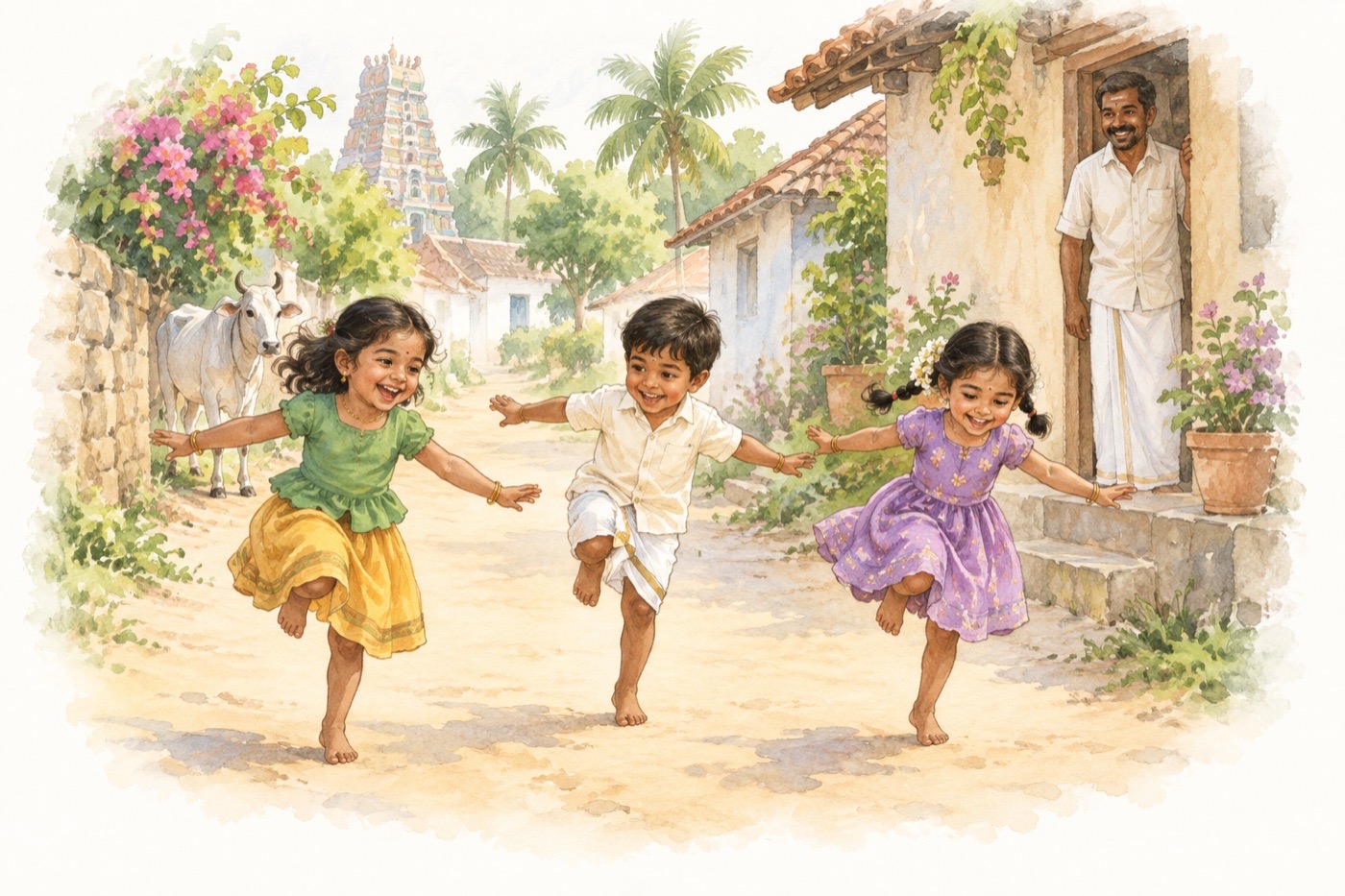
Bringing traditional games in schools back into the daily timetable is one of the simplest, cheapest and most powerful changes an Indian school can make. Pandi, Pallankuzhi, Kho-Kho, Kabaddi, Paramapadham and Kolattam were never just pastimes. They train the body, the mind, language, friendship and values, often in the same ten minutes.
India's National Education Policy 2020 asks schools to teach through play and to draw on Indian knowledge traditions. Most teachers agree. What they ask me is: why these games, and where do we start? This letter answers both questions.
Why these games, and not just any play
Any good play helps children grow. But the case for traditional games in schools is stronger, because these games have five features that make them unusually efficient for Indian schools.
1. They cost almost nothing
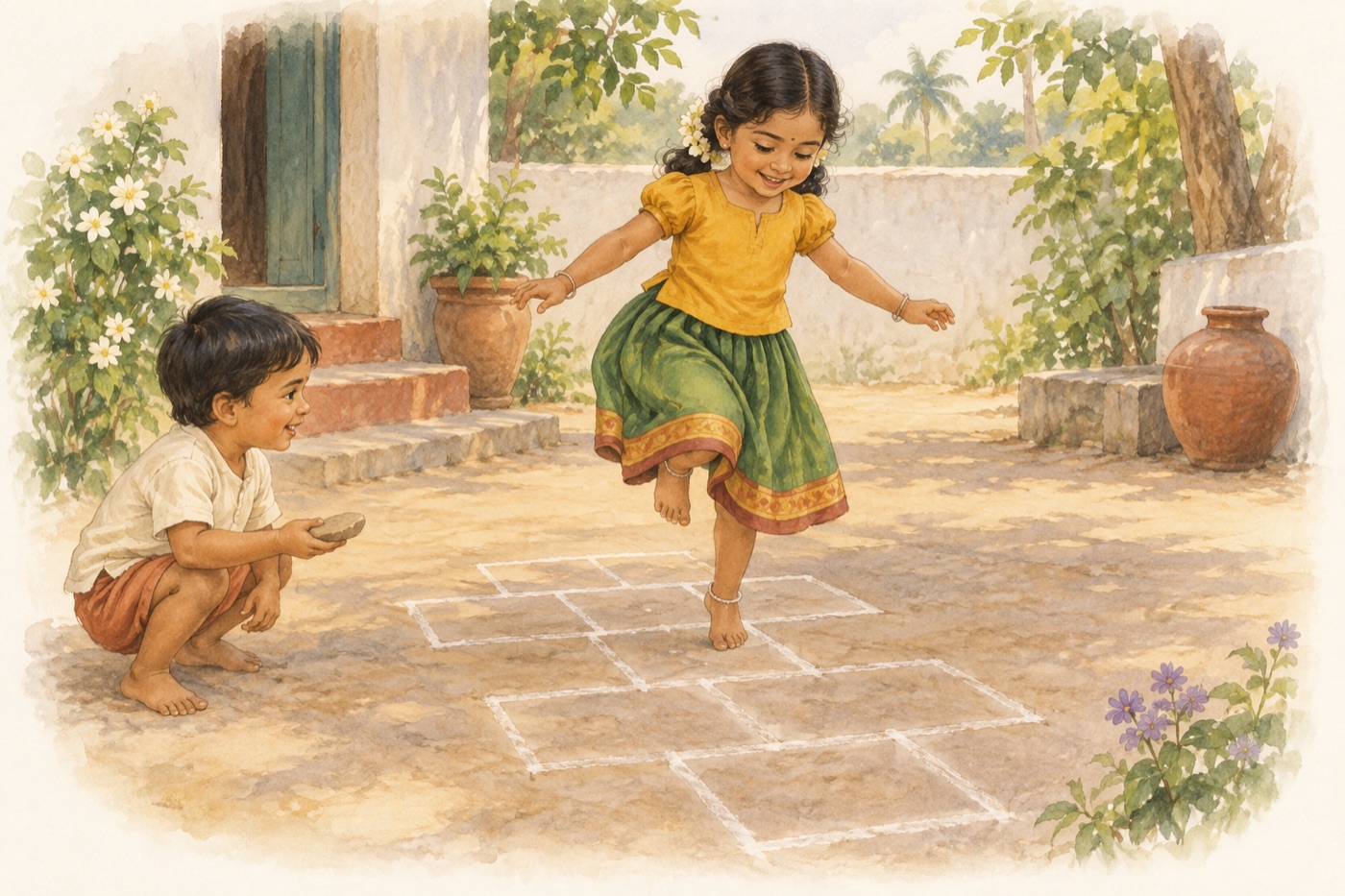
Chalk, seeds, stones, a few sticks and open ground. That is the whole equipment list. A Pallankuzhi board can be an egg tray. A Pandi court is a few chalk lines on the verandah. A school with no budget for toys can still run a full games programme. A rural school and a city school can play the same games on the same day.
2. They work on several areas of development at once
The National Curriculum Framework for the Foundational Stage (NCF-FS) 2022 asks for integrated learning, not separate subjects. Traditional games already work this way. One round of Pandi asks a child to hop and balance, count the squares, aim the stone, wait for a turn and argue fairly about whether a foot touched the line. That is body, number, self-control, language and values, all together.
3. They grow with the child
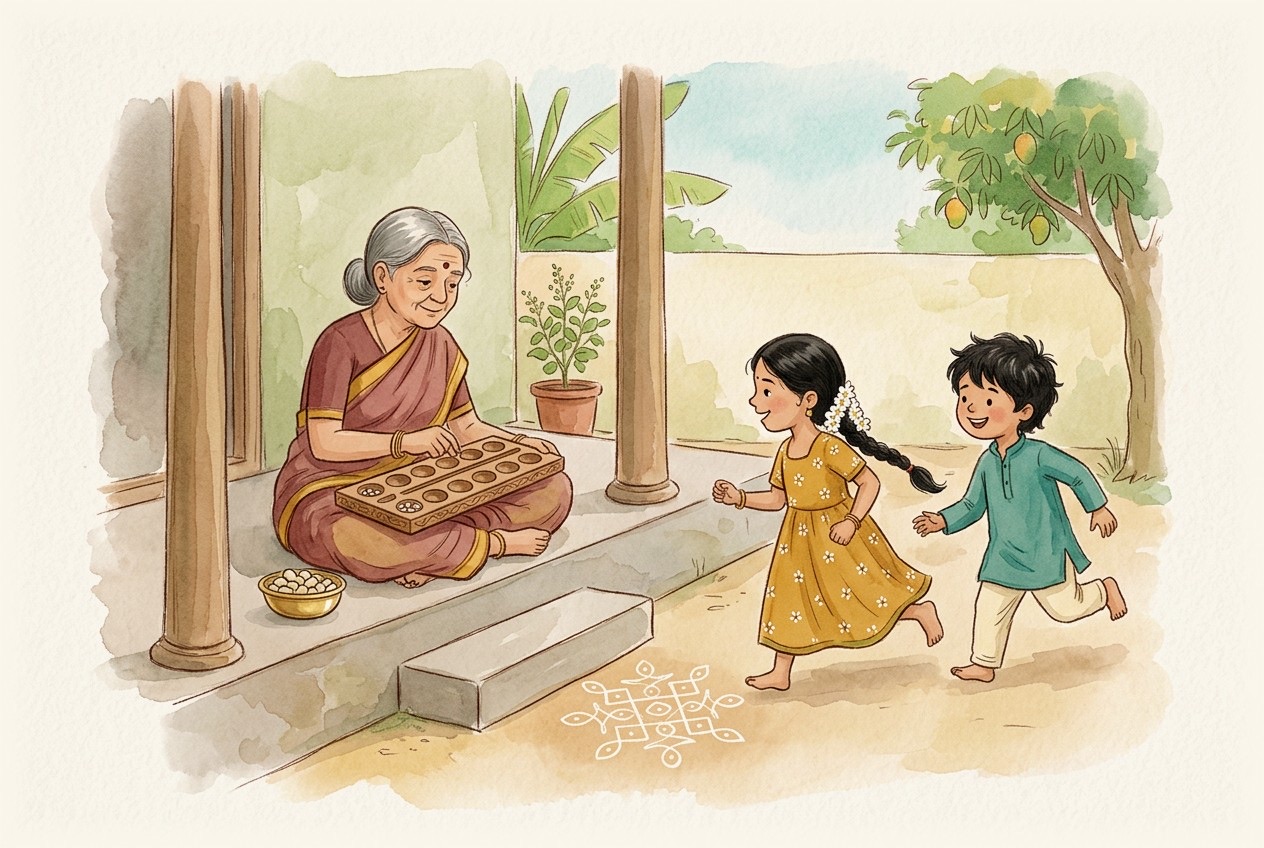
The same game can be played simply at three and strategically at twelve. Pallankuzhi, for example, can be taught as four graded games on one board. A three-year-old sows one seed in each pit and counts. A six-year-old plans captures several moves ahead. I wrote about this progression in The Maths Was Already on the Board. Few bought toys stretch this far.
4. Children govern them themselves
There is no referee in Goli or Kannamoochi. Children agree the rules, notice when someone breaks them, and settle the argument. Piaget saw this kind of rule-making as the root of moral reasoning. It is also excellent practice in speaking, listening and persuading.
5. They arrive already rooted in the child's family and language
A child who learns Paramapadham from a grandmother brings her voice, her stories and her language into the game. That gives learning meaning. It also makes parents allies, because they recognise what their children are playing.
How to bring traditional games into your school
Here are six practical steps that make traditional games in schools part of everyday life, not a festival event. You do not need to do them all at once. Start with one, and add another each term.
Protect a daily free-play period of 30 to 40 minutes
Put it on the timetable, outdoors where possible, and treat it as part of the school day, not a reward for finishing work. Children who earn play by being "good" learn that play is a treat. Children who get it every day learn that it matters.
Daily outdoor time also protects eyesight. A large trial in China found that one extra 40-minute outdoor class each school day reduced new cases of short sight over three years. It also helps children meet the activity levels the World Health Organization recommends.
Sequence the games by age
Not every game suits every child. At Sarvam Ekam we use three stages, set out in our traditional games framework from birth to 21:
- Play to Grow (0 to 7): movement, counting and turn-taking. Kannamoochi, Pandi, simple Pallankuzhi, Paramapadham and clapping songs. The adult plays alongside the child.
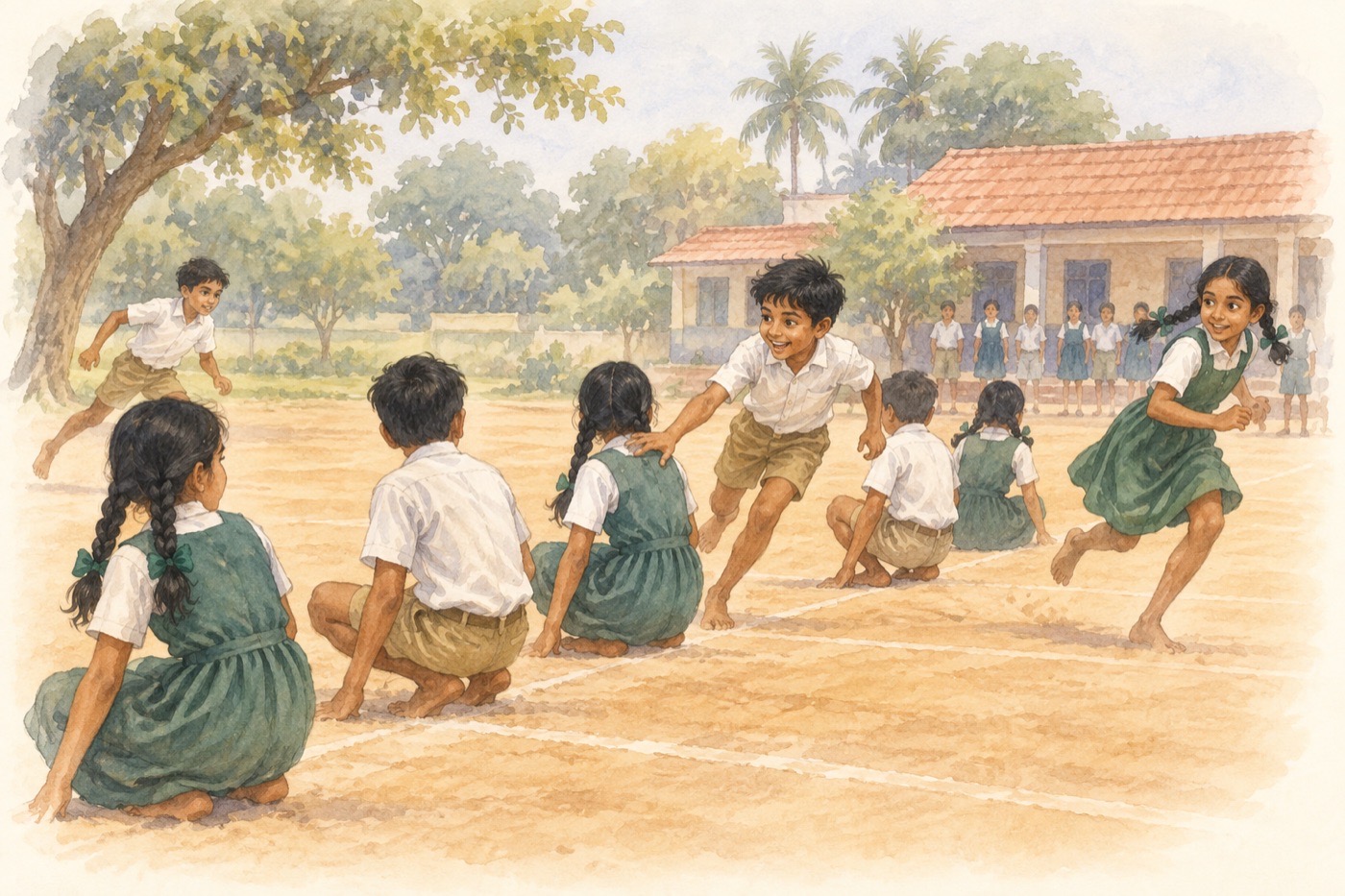
- Play to Think (7 to 14): strategy, teams and scientific noticing. Aadu Puli, Thaayam, full Pallankuzhi, Goli, Pambaram, Kho-Kho and Kabaddi. Teachers link the games to maths and science lessons.
- Play to Master and Share (14 to 21): skill and leadership. Silambam, Kolattam and advanced strategy games. Older students teach younger ones and record local rule variants before they are lost.
The journey runs from player to practitioner, to team leader, to teacher, and finally to keeper of the tradition.
Keep a games corner
Set aside one shelf or one corner with boards and natural materials: tamarind seeds, cowrie shells, smooth stones, coconut-shell tops, sticks and chalk. Label the boxes with pictures so the youngest children can tidy up by themselves. An egg tray with fourteen cups makes a Pallankuzhi board. Children can draw a Paramapadham board on chart paper and make their own snakes and ladders.
Invite grandparents to teach a game each term
Grandparents are the real experts. Invite one or two each term to teach a game from their own childhood. Children learn the game. Grandparents feel valued. And teachers often discover games, rhymes and local rules they had never heard of. Ask an older student to write down the rules and draw the board, and your school slowly builds its own games library.
Observe play with checklists, not tests
The NCF-FS asks schools not to test young children formally. Observation is the alternative, and games are the perfect place to observe. Give teachers a short checklist for each game, with each item marked not yet, with help or independently. For Pallankuzhi, it might read:
- Sows one seed per pit without skipping.
- Counts on from the starting pit instead of starting again from one.
- Waits for a turn and accepts a loss calmly.
- Chooses a pit for a reason, and can say the reason.
A teacher who watches one round of a game with care learns more about a child than a worksheet can show. Our kindergarten audit and teacher training both use observation like this.
Adapt for every child
Every child can play. Use larger counters and wider pits for children who find small objects hard. Offer seated versions of running games. Pair a child who needs support with a patient partner. Seeds and shells are small, so always supervise children under three, and any child who still puts things in the mouth. Bottle caps make safe counters.
Starting traditional games in schools: a first week
If you want to start on Monday, try this:
- Monday: chalk a Pandi court in the play area and teach it at free-play time.
- Tuesday: play Pallankuzhi in pairs with egg trays and seeds.
- Wednesday: play Kannamoochi (hide-and-seek) outdoors.
- Thursday: play Paramapadham and talk about the virtues on the ladders.
- Friday: ask the children which game they want to play again, and why.
Then keep going. The games do the teaching. Your job is to give them time, space and attention.
Curriculum that happens to be old
We often call these games heritage, something to display at a festival and remember fondly. I would put it differently. Traditional games are curriculum that happens to be old. Generations of children refined them long before anyone wrote a lesson plan, and they have lasted because they work.
When we make room for traditional games in schools, we are not looking backwards. We are using some of the best learning tools we have, and they are already in our courtyards. You can read more about play-based learning in kindergarten, or write to us if you would like help starting a games programme in your school.
Questions parents and teachers ask
Why should schools teach traditional games?
Traditional games build physical, thinking, language, social and moral skills at the same time, cost almost nothing, grow with the child, and connect learning to the child's family and culture. They match the play-based learning that NEP 2020 and the NCF Foundational Stage ask for.
How much time should schools give to play each day?
We recommend a protected free-play period of 30 to 40 minutes every day, outdoors where possible, treated as part of the timetable rather than a reward.
Which traditional games suit kindergarten children?
For ages three to seven, start with Kannamoochi (hide-and-seek), Pandi (hopscotch), simple Pallankuzhi, Paramapadham and clapping songs, with an adult playing alongside.
How can teachers assess learning through games?
By observing. Teachers use a short checklist for each game and mark each skill as not yet, with help, or independently, instead of giving formal tests.
More Letters from the Founder →
Jayanthi Vijayan
Founder of Sarvam Ekam. Jayanthi works with kindergartens across India on audits, teacher training and curriculum design, bringing together Waldorf, Montessori, Reggio Emilia and traditional Indian play.
Connect on LinkedIn →