School Nutrition Gardens: What PM POSHAN Asks, and How to Make It Work
What the PM POSHAN guidelines ask of every school nutrition garden, why school gardens usually fail, and how schools can turn theirs into a living classroom.
 Jayanthi Vijayan
· 6 min read
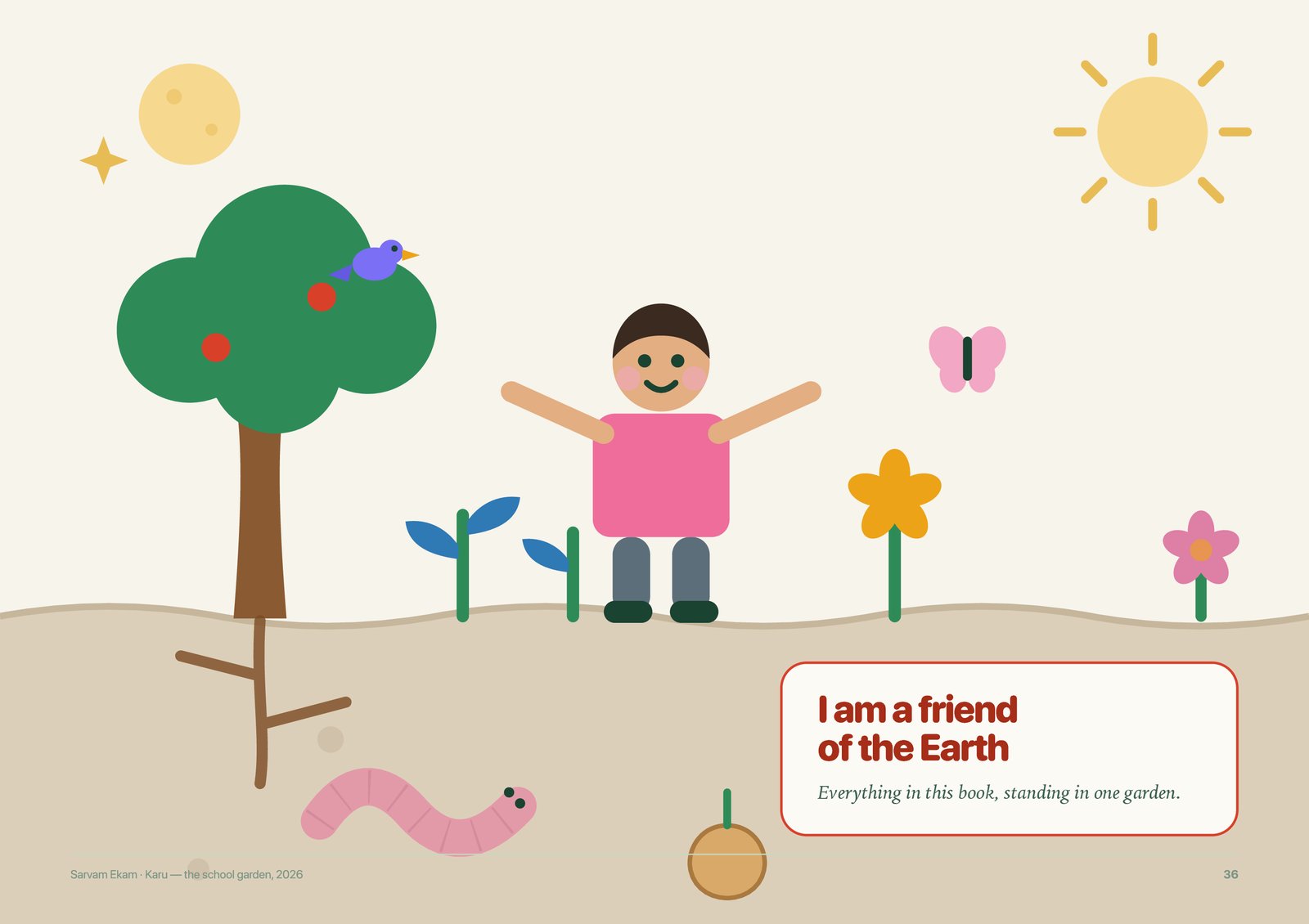
In most schools I visit, the most important room for a child's health is one the children never enter: the kitchen. Every day it cooks a hot meal for hundreds of children. And every day the vegetables in that meal arrive in a sack, from somewhere the children have never seen.
India's PM POSHAN scheme wants to change that. Its guidelines give a whole chapter to the School Nutrition Garden, a small kitchen garden that the children grow themselves and that feeds into their own midday meal. I have spent the last week reading that chapter closely, and in this letter I want to tell you what it asks, why I think it is one of the most hopeful things in Indian school policy, and where most schools will need help to make it work.
What the PM POSHAN guidelines ask of schools
PM POSHAN (Pradhan Mantri Poshan Shakti Nirman) feeds about 12 crore children in Balvatika and Classes 1 to 8 in government and government-aided schools. When the Ministry of Education comprehensively revised the scheme guidelines in December 2022, School Nutrition Gardens became one of its named focus areas. Chapter 7 is worth reading in full. These are the points that matter most for a school leader:
- Every school, rural and urban. The Ministry has asked all schools to develop and maintain a School Nutrition Garden, with teachers, students, parents and even local residents involved.
- No land is not an excuse. Three or four small beds (kyaries) make a model garden. Pots, grow bags, old buckets, crates and terraces all count, and climbers like snake gourd can grow up a wall.
- Organic, with no chemicals. Composting and vermicomposting from kitchen peels are written in, and so is watering with the water used to wash rice and dal.
- Children do the work. Each class gives one to two hours a week. Teams care for their own beds. Children inspect their crops every morning, younger ones report aloud, and older ones keep measurements in a Garden File. There are even job titles: Tool Manager, Pump Engineer, Compost King.
- It is meant to be a classroom. The guidelines call the garden "one of the finest examples of experiential learning" and name the lessons in it: care for living things, teamwork, healthy food, and numeracy, including measurement, areas and volumes, data gathering and presentation.
- There is money and help. Up to an average of ₹5,000 per garden can come from the scheme's flexi fund for seeds, tools and compost. Krishi Vigyan Kendras, the agriculture and horticulture departments and the forest department can give seeds, saplings, manure and training. Fencing and land levelling can go under MGNREGA. A district committee under the Collector is meant to tie it all together.
Why this matters to me
The guidelines say something I have been saying for years: wonder, rather than books, words, or learning all the facts, provides the direction for environmental education in early childhood. That sentence could sit on the first page of our own work at Sarvam Ekam.
A child who sows the keerai, waters it, watches the caterpillar and then eats it in her lunch has learnt biology, patience and nutrition in one loop. She has also learnt that food is something people make, not something that appears. Multiply that by the 11 lakh schools the scheme covers, and it is a quiet revolution.
Where school gardens usually fail
I have seen many school gardens. The ones that fail tend to fail in the same few ways, and none of them is about seeds or soil.
- It becomes the gardener's job. The beds look lovely for the inspection, and the children are not in them.
- It sits outside the timetable. No subject owns it, so it is the first thing dropped when exams come.
- Teachers have never been shown how. Most of us grew up without a garden at school. A teacher who is unsure of compost will not hand a trowel to thirty children.
- The calendar works against it. Crops sown in the wrong month dry up over the summer holidays, and the garden starts from zero every June.
- Nothing is recorded. Without the Garden File, nobody can show the parents, the SMC or the district what the children learnt.
The guidelines tell schools what to do. What most schools are missing is how to make a garden part of an ordinary school week.
How Sarvam Ekam can help your school garden
This is the work we already do. Sarvam Ekam works with a group of schools to strengthen their academics, and trains teachers on their own campuses. With our partners at Karu, we run a classroom growing programme built on biodynamic practice, which is organic and chemical-free, just as the guidelines ask. For a school setting up its School Nutrition Garden, we offer:
- A garden plan for your campus. We walk the site with you. Do you have open ground, a terrace, or only a corridor? Then we plan beds or containers, compost, water and a crop list that fits your school term and your kitchen.
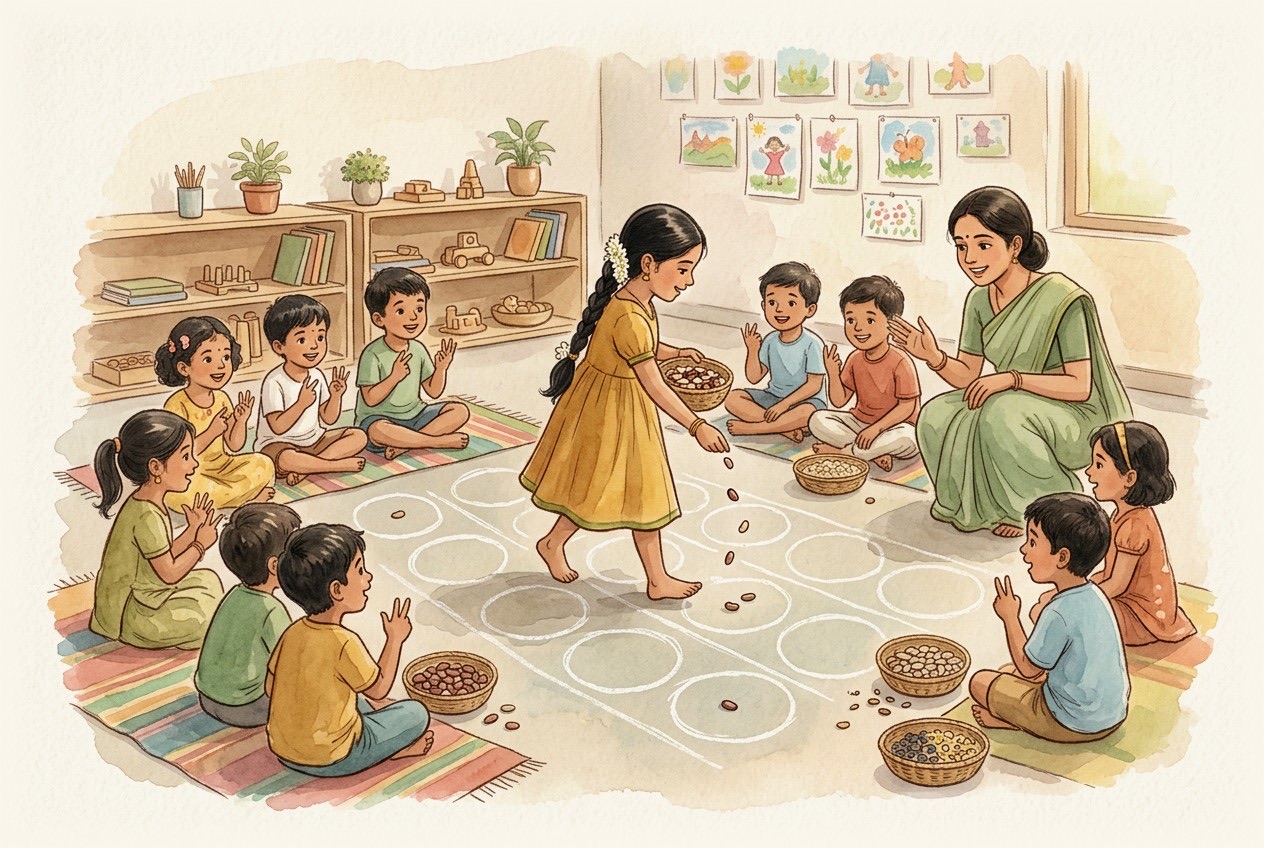
- On-campus teacher orientation. Your teachers learn to make the growing medium, to compost, and to lead a class in the garden. They mix it in front of the children first, and in the second week the children mix it themselves.
- A calendar that keeps the garden alive. Our Sowing Booklet 2026 gives every day of the year one of four colours (root, leaf, flower or fruit) that even a three-year-old can read. That is the "calendar of activities" the guidelines ask for, along with a four-minute morning routine that matches their daily crop inspection.
- Garden-to-classroom lesson maps. Measuring a bean plant, finding the area of a bed, counting seeds, graphing the harvest, and writing a garden diary. We map garden work to maths, EVS and language from Balvatika to Grade 5, so the garden earns its place in the timetable.
- Garden File templates. Simple observation sheets for young children and data sheets for older ones, so you can show what the children did and learnt.
Private schools are not part of PM POSHAN, but none of this depends on the scheme. The National Curriculum Framework for the Foundational Stage recommends a small kitchen garden for every early-years setting too.
Begin this term
You do not have to wait for the district committee. Pick one class and four containers. Choose seeds that come up fast, like radish, keerai and vendhayam. Give one child the watering every morning, and start a Garden File with one drawing a week. By the end of the term you will have a harvest for the kitchen and children who know where their lunch comes from.
If you would like us to help you plan your school's garden, train your teachers or link it to your curriculum, write to us or email jay@sarvamekam.com. You can read eight pages of the Sowing Booklet free at sarvamekam.in/sowing-booklet.
Let every school kitchen have a garden at its door, and let the children be its gardeners.
With warmth, Jayanthi
Questions parents and teachers ask
What is a School Nutrition Garden?
A small kitchen garden in a school, grown by the children with their teachers, whose vegetables, greens and fruit go into the school's midday meal. India's PM POSHAN guidelines describe it in Chapter 7 as both a source of fresh food and a way of learning by doing.
Do schools have to set up a School Nutrition Garden under PM POSHAN?
The Ministry of Education has asked all government and government-aided schools covered by PM POSHAN, rural and urban, to develop and maintain one. Private schools are not part of the scheme, but India's foundational-stage curriculum framework also recommends a kitchen garden for young children.
How much funding is available for a school garden?
The guidelines allow an average of up to ₹5,000 per garden from the PM POSHAN flexi fund, shared between the Centre and the State, for seeds, equipment and compost. Krishi Vigyan Kendras and the agriculture, horticulture and forest departments can provide seeds, saplings, manure and training, and work like fencing or levelling can be done under MGNREGA.
Our school has no open land. Can we still have a nutrition garden?
Yes. The guidelines say three or four small beds make a model garden, and that pots, grow bags, crates, old buckets and terraces all work. Climbing vegetables such as gourds and beans can grow up a wall.
How can Sarvam Ekam help our school garden?
With Karu, we plan the garden for your campus, orient your teachers on site, give you a year-round sowing calendar, and map garden activities to maths, EVS and language from Balvatika to Grade 5. Write to jay@sarvamekam.com.
More Letters from the Founder →
Jayanthi Vijayan
Founder of Sarvam Ekam. Jayanthi works with kindergartens across India on audits, teacher training and curriculum design, bringing together Waldorf, Montessori, Reggio Emilia and traditional Indian play.
Connect on LinkedIn →