Why Every Child Should Sow a Seed This Year
Why gardening with children matters for teachers and parents, what the research shows, and a four-minute morning routine from our Sowing Booklet 2026.
 Jayanthi Vijayan
· 5 min read
Last week a four-year-old held a radish seed up to the light and asked me, "Is it sleeping?" She was right. A seed is a sleeping plant, and three mornings later she saw it wake up. That is what gardening with children gives us: questions like hers, every day.
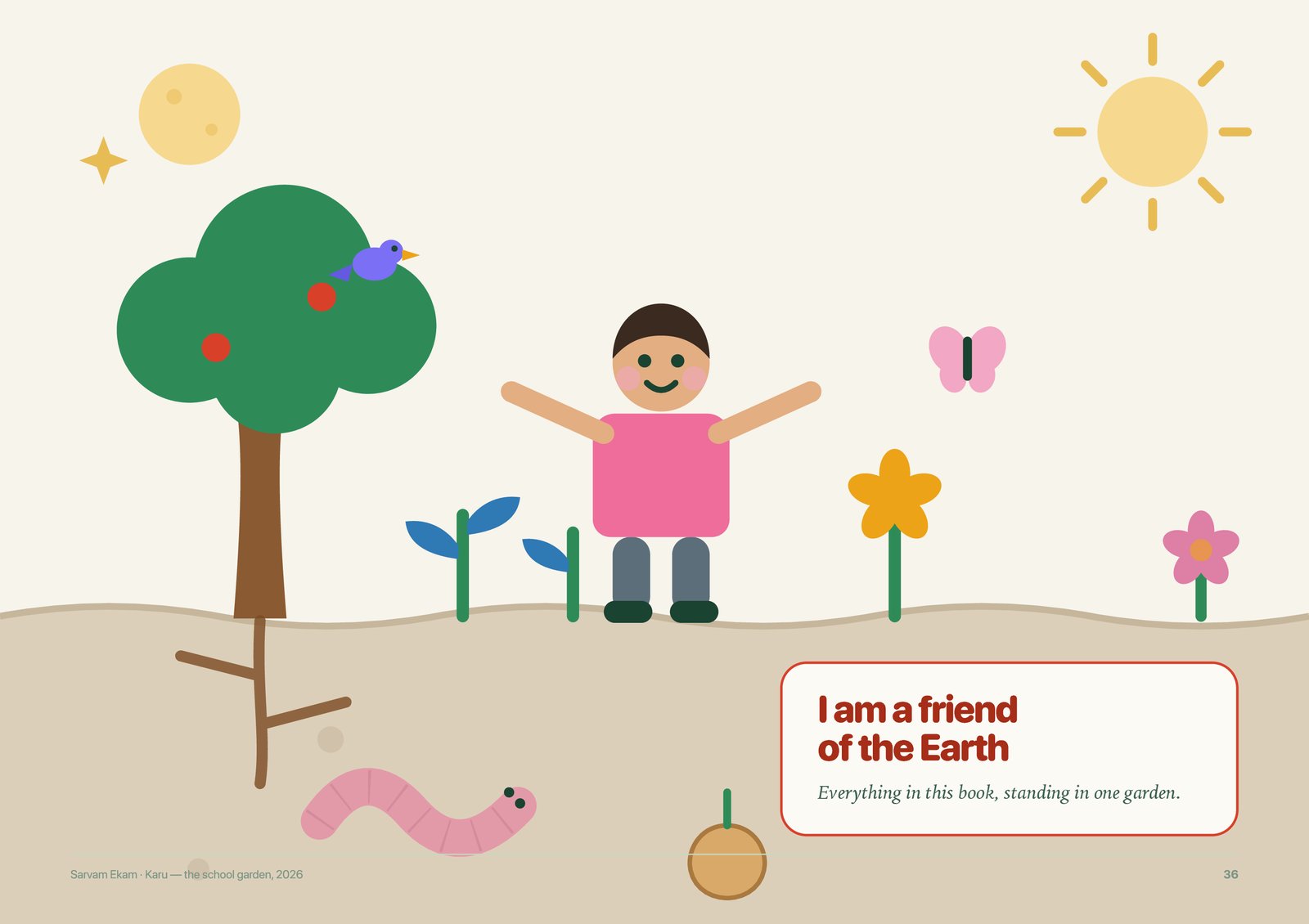
That small moment is why we made our new Sowing Booklet 2026, with our friends at Karu. It is a garden calendar and a storybook in one, and in this letter I want to tell you why I think every child, in every school and every home, should sow something this year.
Children are losing the soil
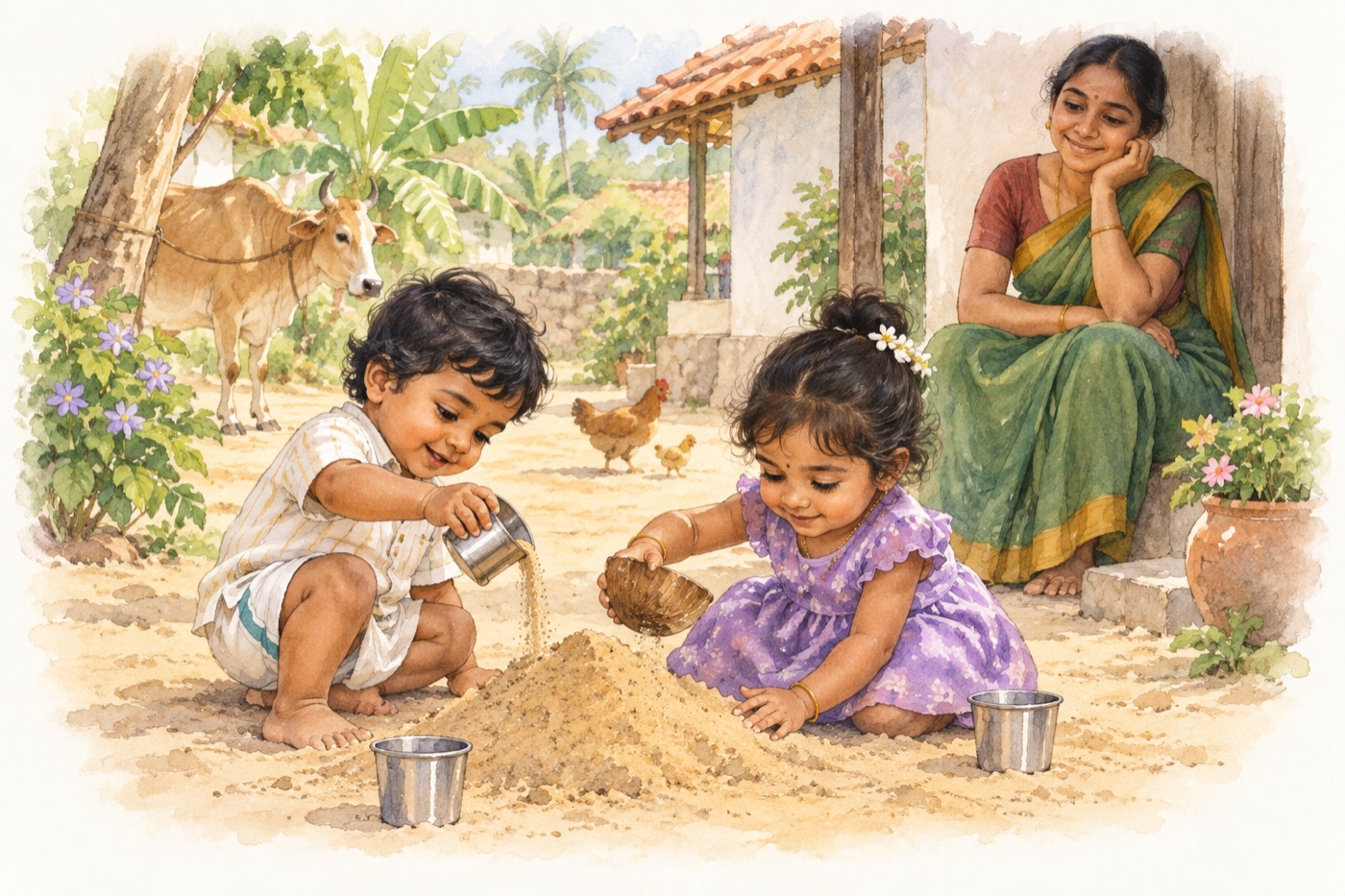
Many of our children now grow up in flats, travel in vans and spend their evenings on screens. They know that vegetables come from a shop. Fewer of them have pushed a finger into wet soil, waited for a shoot, or found a worm and wondered what it does down there.
The World Health Organization asks that children aged three and four move for at least 180 minutes a day, with no more than one hour of screen time, and less is better. A garden is one of the easiest ways I know to get there. Digging, carrying water, squatting to look closely and running to check the seeds: none of it feels like exercise.
What gardening with children gives them
On the first page of the booklet we wrote one sentence for parents and teachers: farming gives children a chance to care, observe, feel and create. It connects them with the rhythm of nature, supports sensory integration, nurtures patience and responsibility, and brings the joy of creating life with their own hands.
The research points the same way. It is honest research, mostly from other countries and often small, so I will not overclaim it. But it is worth knowing:
- They taste what they grow. In one study of 115 second-graders, children who had a school garden as well as nutrition lessons were more likely to choose and eat vegetables at lunch than children who had lessons alone. A review of 14 gardening studies found that 10 reported children eating more fruit or vegetables afterwards.
- They learn science they remember. In a study of 647 children aged eight to eleven, those who gardened as part of science scored higher on a science test than children taught only in the classroom.
- They move more and sit less. In a trial across twelve schools, children were more active during garden lessons than classroom lessons.
- They learn to work together. Children in a year-long school garden programme improved in working with groups and in self-understanding.
- The children who struggle often shine. A review of 40 studies found teachers and children describing wellbeing benefits from school gardens, especially for pupils who find the classroom hard.
- It lasts. Adults who gardened as children were more likely to care for trees and plants as grown-ups.
India is already asking for this
This is not only a Sarvam Ekam idea. India's curriculum framework for the foundational stage, ages three to eight, recommends a small kitchen garden for hands-on, sensory work, and sets the goal that children develop a positive regard for the natural environment. The PM POSHAN guidelines ask every school, rural and urban, to grow a School Nutrition Garden with teachers, children and parents, even in pots and containers.
So the question is not whether gardening with children belongs in school. It is how to make it part of an ordinary school morning.
Four minutes every morning
That is what the Sowing Booklet is for. It takes the 2026 biodynamic sowing calendar and turns it into four colours a three-year-old can read. Every day of the year is a root day, a leaf day, a flower day or a fruit and seed day:
- Find today's colour. A child points to today's square on the wall chart and names the colour.
- Say the plant part, and show it. "Today is a leaf day!" Hands flat for leaf, fists low for root, open palms for flower, round arms for fruit.
- Open only that seed tin. Four tins, four colours. The children run the choice and sow.
- Draw what you did. One line and one drawing a day. Over a term, the garden book becomes the record.
I want to be clear about one thing. We do not ask children to believe that the moon makes the radish grow. The calendar gives the class a rhythm to notice: the colours change, the moon is round and then shy and then round again, the seeds wake up at their own pace. Noticing is where science begins.
The Little Garden
The second half of the booklet is The Little Garden: eight themes for the year, each with a song, a short story and things to do, draw and notice. What is a seed? What is soil? What does a plant need? Who are the little helpers in the soil? Where do leaves go? How do we care for a tree? Why does the moon change? What can we hear, smell and touch in the garden?
Nothing is taught as a concept. The child meets the thing, touches it, cares for it, and slowly builds a relationship with it. Story, song, garden, art, observation. That is the whole method.
Start gardening with children this week
You do not need land. For a home or a classroom, this is enough:
- Two pots or grow bags and a spot that gets the sun.
- Fast seeds for the first try: mullangi (radish) shows in about three days, and keerai or vendhayam in three to five. Your kitchen already has vendhayam.
- One child in charge of the watering, every morning.
- One drawing a week of what grew.
Then open the booklet together and find today's colour.
You can read eight pages free at sarvamekam.in/sowing-booklet, including the morning routine, the four kinds of day, the whole of January and the first song and story. The full booklet is ₹499 for a year, read on your phone, tablet or computer. Schools that want a full growing programme, with teacher orientation from Karu and a plant of their own for every child, can write to us.
Let us give our children a seed to hold this year, and the patience to watch it wake up.
With warmth, Jayanthi
Questions parents and teachers ask
At what age can children start gardening?
From about two or three. Young children can water, sow large seeds like beans, dig and look for worms. Choose fast seeds such as radish, fenugreek or keerai so they see a shoot within a few days.
Do we need land to garden with children?
No. Two pots or grow bags in a sunny spot are enough to begin. India's PM POSHAN guidelines also say school nutrition gardens can be grown in pots and containers.
What is the Sowing Booklet 2026?
A 40-page booklet by Sarvam Ekam and Karu: a sowing calendar for every day of 2026 in four colours children can read, a four-minute morning routine, and The Little Garden, eight themes of songs, stories and garden activities. Read a free sample at sarvamekam.in/sowing-booklet; the full booklet is ₹499 a year.
Does the moon really affect how plants grow?
We do not teach it as a scientific claim. The calendar gives children a daily rhythm to notice and talk about, and watching the moon change is a good first step in observing nature.
More Letters from the Founder →
Jayanthi Vijayan
Founder of Sarvam Ekam. Jayanthi works with kindergartens across India on audits, teacher training and curriculum design, bringing together Waldorf, Montessori, Reggio Emilia and traditional Indian play.
Connect on LinkedIn →